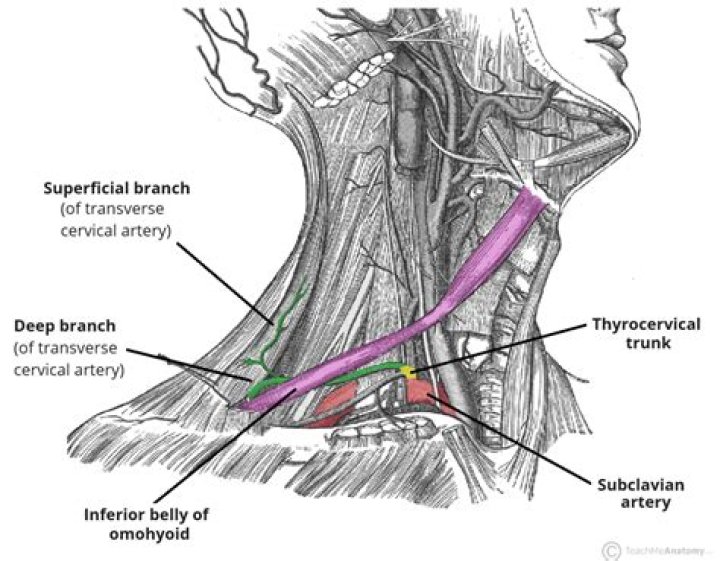
The vagus nerve: Innervates the diaphragm as well as movements in the larynx and pharynx. It also provides parasympathetic stimulation for the heart and the digestive system. It is a major autonomic nerve. The posterior thoracic nerves: These nerves stimulate the intercostal muscles located around the pleura.
Which nerve controls the diaphragm and intercostal muscles?
The phrenic nerves provide motor innervation to the diaphragm and work in conjunction with secondary respiratory muscles (trapezius, pectoralis major, pectoralis minor, sternocleidomastoid, and intercostals) to allow respiration.
What happens when the diaphragm and external intercostal muscles contract?
During inspiration, the diaphragm and external intercostal muscles contract, causing the rib cage to expand and move outward, and expanding the thoracic cavity and lung volume. This creates a lower pressure within the lung than that of the atmosphere, causing air to be drawn into the lungs.
What nerves stimulate the diaphragm and cause it to contract?
The phrenic nerves send a signal to the diaphragms stimulating them to breathe. People who have problems with the brain or spinal cord at times do not send the signals well to breathe. Diaphragm pacing can use the phrenic nerves to send the signals to a person’s diaphragm muscles to contract and take a breath in.Which nerves stimulate the diaphragm and external intercostal muscles to contract quizlet?
VRG of medulla sends neurons out through phrenic and intercostal nerves and stimulate the diaphragm and external intercostal muscles to contract which will expand the lungs which increases lung volume.
What nerve controls the diaphragm?
The phrenic nerve controls the diaphragm, which is the major muscle for breathing. Three major nerves (given the symbols C3, C4, C5) exit from the spinal cord in the neck and combine to form the phrenic nerve. Right and left phrenic nerves to travel between the lung and heart to power each side of the diaphragm.
What is phrenic nerve stimulation?
Phrenic nerve stimulation is a technique used to reanimate the diaphragm of patients with central nervous system etiologies of respiratory insufficiency. Current clinical indications include congenital central hypoventilation syndrome, spinal cord injury above C4, brain stem injury, and idiopathic severe sleep apnea.
What nerves are connected to the diaphragm?
The phrenic nerve is actually a pair of nerves, the right and left phrenic nerves, that activate contraction of the diaphragm that expands the thoracic cavity. Because the lungs are stuck to the thoracic cavity, this expands the lungs and thereby draws air into them.What nerve Innervates the external intercostal muscles?
Both the external and internal muscles are innervated by the intercostal nerves (the ventral rami of thoracic spinal nerves), are supplied by the intercostal arteries, and are drained by the intercostal veins. Their fibers run in opposite directions.
What nerve stimulates the diaphragm quizlet?Phrenic Nerves. Carries impulses to the diaphragm from the brain.
Article first time published onWhat causes the diaphragm to contract?
Upon inhalation, the diaphragm contracts and flattens and the chest cavity enlarges. This contraction creates a vacuum, which pulls air into the lungs. Upon exhalation, the diaphragm relaxes and returns to its domelike shape, and air is forced out of the lungs.
What makes the diaphragm contract?
It contracts and flattens when you inhale. This creates a vacuum effect that pulls air into the lungs. When you exhale, the diaphragm relaxes and the air is pushed out of lungs.
What happens to the muscles of the diaphragm the external intercostal muscles and the position of diaphragm during inspiration and expiration?
When drawing breath (i.e., during inspiration), the external intercostal muscles and diaphragm contract simultaneously. This causes the thorax to expand and inflate the lungs by creating negative pressure inside the thoracic cavity. During expiration, the contraction of these muscles ceases, causing them to relax.
When the diaphragm and the intercostal muscles contract the *?
When the diaphragm and external intercostal muscles contract, (e) the volume of the thorax increases. This will reduce intrapulmonary pressure and cause air to flow into the lungs (inspiration). Contraction of the diaphragm will flatten it, causing an increase in thoracic volume.
What is the role of the intercostal muscles and diaphragm?
The diaphragm is attached to the base of the sternum, the lower parts of the rib cage, and the spine. As the diaphragm contracts, it increases the length and diameter of the chest cavity and thus expands the lungs. The intercostal muscles help move the rib cage and thus assist in breathing.
Which of the following occurs when the diaphragm contracts quizlet?
What happens when the diaphragm contracts? The thoracic cavity gets larger, pressure decreases, and atmospheric gas enters the lungs.
What happens in the lungs when the diaphragm and external intercostal muscles relax quizlet?
What happens in the lungs when the diaphragm and external intercostal muscles relax? Air is forced out of the lungs. The respiratory mucosa is continuous through the: … upper and lower respiratory tracts.
When the diaphragm and the external intercostals relax volume decreases and pressure increases in the thoracic cavity This describes which process?
During inhalation, the diaphragm is contracted which increases the volume of the lung cavity. During exhalation, the diaphragm is relaxed which decreases the volume of the lung cavity. 3) Costal breathing: a mode of breathing that requires contraction of the intercostal muscles.
Where are the vagus and phrenic nerves?
Vagus and phrenic nerves start in the neck and run downward in the mediastinum and pass through the diaphragm. There are right and left phrenic nerves and right and left vagus nerves. Both vagus and phrenic nerves are mixed nerves.
How is the vagus nerve stimulated?
Loud gargling with water or loud singing activates our vocal cords which in turn stimulates the vagus nerve. Foot massage: gentle or firm touch can assist in stimulation the vagus nerve. Cold water face immersion: immerse your forehead eyes and at least 2/3 of both cheeks into cold water.
Is it vagus or vagal nerve?
Vagus nerveTA26332FMA5731Anatomical terms of neuroanatomy
What are intercostal nerves?
The intercostal nerves emerge from the somatic nervous system and aid in the contraction of muscles as well as provide sensory information from the skin and parietal pleura. The intercostal nerves arise from the anterior rami of the thoracic spinal nerves from T1 to T11.
What nerve innervates the diaphragm quizlet?
Terms in this set (5) phrenic nerve arises from this plexus and innervates the diaphragm. The phrenic nerve arises from the 3rd, 4th and 5th cervical spinal nerves.
Does vagus nerve innervate diaphragm?
The phrenic is the motor and sensory nerve of the diaphragm. The vagus provides the parasympathetic supply for all the organs of the thorax and abdomen. The courses of these two nerves are similar: they both start in the neck, run downward in the mediastinum, and pass through the diaphragm.
What are external intercostal muscles?
The external intercostals are the more surface-level muscles in between the ribs which serve to elevate the rib cage and assist the lungs in expanding to take in air.
When the diaphragm and external intercostal contract and the rib cage is lifted which process is taking place?
The diaphragm contracts and flattens. The external intercostals (and others) pull the rib cage up, expanding the thoracic cavity. Air rushes in. Alveolar pressure then becomes positive.
Where are external intercostal muscles?
The external intercostal muscles originate on the inferior surfaces of the proximal parts of the ribs and insert on the superior and distal parts of the next lower rib. These are innervated by intercostal nerves originating in thoracic segments of the spinal cord.
What nerve innervates the diaphragm and is critical for respiration?
The phrenic nerve is among the most important nerves in the body due to its role in respiration. The phrenic nerve provides the primary motor supply to the diaphragm, the major respiratory muscle. Phrenic nerve injury, such as may occur from cardiothoracic surgery, can lead to diaphragmatic paralysis or dysfunction.
Why does phrenic nerve supply diaphragm?
The phrenic nerve provides motor innervation to the diaphragm; the main muscle of respiration. As the phrenic nerve is a bilateral structure, each nerve supplies the ipsilateral side of the diaphragm (the hemi-diaphragm on the same side as itself).
Is phrenic nerve a cranial nerve?
Phrenic nerveFMA6191Anatomical terms of neuroanatomy
What is the phrenic nerve quizlet?
The phrenic nerve, which arises from the cervical plexus, supplies both motor and sensory fibers to the diaphragm, the main breathing muscle. Irritation of the phrenic nerve causes spasms of the diaphragm, or hiccups. If both phrenic nerves are severed, the diaphragm is paralyzed and respiratory arrest occurs.