Examples of Newton’s third law of motion are ubiquitous in everyday life. For example, when you jump, your legs apply a force to the ground, and the ground applies and equal and opposite reaction force that propels you into the air.
What is strong law of action and reaction?
For every action force, there is a corresponding reaction force which is equal in magnitude and opposite in direction. Furthermore, the forces are central forces, i.e., they act along the line joining the particles.
What are Newton's 1st 2nd and 3rd laws of motion?
In the first law, an object will not change its motion unless a force acts on it. In the second law, the force on an object is equal to its mass times its acceleration. In the third law, when two objects interact, they apply forces to each other of equal magnitude and opposite direction.
Where there is action there is reaction?
Formally stated, Newton’s third law is: For every action, there is an equal and opposite reaction. The statement means that in every interaction, there is a pair of forces acting on the two interacting objects. The size of the forces on the first object equals the size of the force on the second object.Do action and reaction act on the same body explain?
Action and reaction always acts on different bodies. Both the forces are equal in magnitude but act in opposite directions. Action and reaction forces are both simultaneous and reaction appear as long as there is action.
What is weak law of action and reaction?
Newton’s third law is also known as the weak law of action and reaction. It states that for every action force, there is a corresponding reaction force which is equal in magnitude and opposite in direction.
Why action and reaction cancel each other?
Either force can be considered the action force or the reaction force. You might think that because action-reaction forces are equal and opposite that they cancel. However, action and reaction force pairs don’t cancel because they act on different objects. Forces can cancel only if they act on the same object.
What is the law of reaction?
Forces cause acceleration, not motion. … The law of action-reaction (Newton’s third law) explains the nature of the forces between the two interacting objects. According to the law, the force exerted by object 1 upon object 2 is equal in magnitude and opposite in direction to the force exerted by object 2 upon object 1.What means action-reaction?
Newton’s Third Law of Motion states, “When one object exerts a force on a second object, the second one exerts a force on the first that is equal in magnitude and opposite in direction.”
What comes first action or reaction?As described by the third of Newton’s laws of motion of classical mechanics, all forces occur in pairs such that if one object exerts a force on another object, then the second object exerts an equal and opposite reaction force on the first.
Article first time published onWhat does Newton's 2nd law state?
Newton’s second law is a quantitative description of the changes that a force can produce on the motion of a body. It states that the time rate of change of the momentum of a body is equal in both magnitude and direction to the force imposed on it.
What are Newton's 3 laws in simple terms?
The laws are: (1) Every object moves in a straight line unless acted upon by a force. (2) The acceleration of an object is directly proportional to the net force exerted and inversely proportional to the object’s mass. (3) For every action, there is an equal and opposite reaction.
What is Newton's second law called?
To understand this we must use Newton’s second law – the law of acceleration (acceleration = force/mass). Newton’s second law states that the acceleration of an object is directly related to the net force and inversely related to its mass. Acceleration of an object depends on two things, force and mass.
Do action and reaction act on the same body or on different bodies explain your answer with the help of example?
Answer: Yes,action and reaction acts on same body. For example, when you walk then your leg pushes ground backward whereas ground pushes you forward but the main thing is that on leg reaction force acts when leg applied its action.
What is action and reaction force in physics?
The force exerted on an object is the action, and the force experienced by the object as a consequence of Newton’s third law is the reaction.
Is action and reaction act on two different bodies?
According to Newton’s third law, every force has an equal and opposite reaction. … From the above example we get that, the action and reaction acts on two different bodies, both the action and reaction are equal in magnitude and the action and reaction acts in opposite directions. Hence, the correct answer is option D.
Why is Newton's third law true?
So the net force on a body of zero mass is always zero, whatever forces act upon it. Therefore if only two forces act on a body of mass zero, they must add to zero, and therefore must be equal size and oppositely directed. This establishes Newton’s third law. … Any force can be decomposed into two parts.
Can action and reaction balance each other if yes give example and explain?
Reaction forces are equal and opposite, but they are not balanced forces because they act on different objects so they don’t cancel each other out. …
How are action and reaction related?
According to Newton’s third law (action and reaction are equal and opposite), the force that the ball exerts on the racket is equal and opposite to that which the racket exerts on the ball. Moreover, a second balanced action and reaction acts between player and racket.
What is the formula of third law of motion?
The third law states that all forces between two objects exist in equal magnitude and opposite direction: if one object A exerts a force FA on a second object B, then B simultaneously exerts a force FB on A, and the two forces are equal in magnitude and opposite in direction: FA = −FB.
What is the strong form of Newton's third law?
The strong form of Newton’s third law requires that F and −F act along the line connecting A and B, while the weak form does not. Illustrations of the weak form of Newton’s third law are often found for magnetic forces.
Can Newton's laws be applied in space?
The ARED uses Newton’s Third Law to make it possible for astronauts to exercise in the weightless environment of the International Space Station. As astronaut Suni Williams applies a force onto the ARED platform, the ARED platform applies an equivalent force back onto her in the opposite direction.
What are action-reaction pairs examples?
For example, consider the interaction between a baseball bat and a baseball. The baseball forces the bat to the left; the bat forces the ball to the right. Together, these two forces exerted upon two different objects form the action-reaction force pair.
What is Newton's first law equation?
Newton’s first law says that if the net force on an object is zero ( Σ F = 0 \Sigma F=0 ΣF=0\Sigma, F, equals, 0), then that object will have zero acceleration. That doesn’t necessarily mean the object is at rest, but it means that the velocity is constant.
How do you find the action and reaction force?
The action force is the force applied by the original action onto an object, and the reaction force is an equal force applied in the opposite direction by the object. For example, if you apply an action force by kicking a ball, the ball will apply a reaction force to your foot.
What is the action and reaction in a rocket launch?
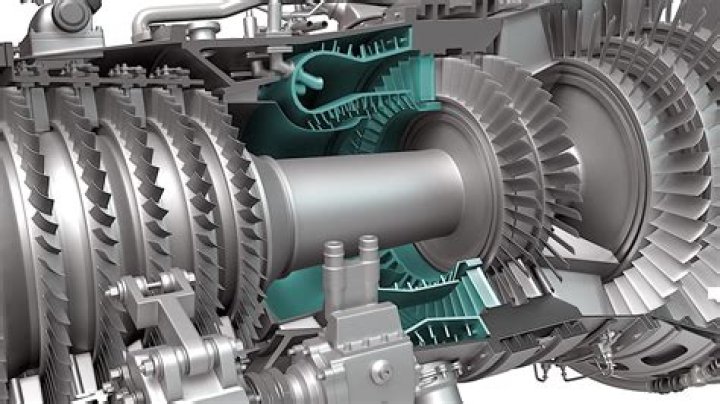
Newton’s Third Law of Motion states that for every action, there is an equal and opposite reaction. … A rocket engine produces thrust through action and reaction. The engine produces hot exhaust gases which flow out of the back of the engine. In reaction, a thrusting force is produced in the opposite reaction.
Do action and reaction force react in the same direction?
No action and reaction forces do not react in the same direction . Action and reaction acts in two different or in the opposite directions.
What is the relationship between action force and reaction force?
The reaction force is what makes you move because it acts on you. Newton’s Third Law of Motion explains that forces always come in action-reaction pairs. The Third Law states that for every action force, there is an equal and opposite reaction force.
Why is K 1 in F Ma?
This defines “gravitational mass”. It has been measured experimentally that “mass” is identical for each definition. “G” is therefore the universal “constant of proportionality”. That’s why your “k” is 1.
Who discovered gravity?
Physically, Sir Isaac Newton was not a large man. However, he had a large intellect, as shown by his discoveries on gravity, light, motion, mathematics, and more. Legend has it that Isaac Newton came up with gravitational theory in 1665, or 1666, after watching an apple fall.
How many laws of Newton are there?
Sir Isaac Newton worked in many areas of mathematics and physics. He developed the theories of gravitation in 1666 when he was only 23 years old. In 1686, he presented his three laws of motion in the “Principia Mathematica Philosophiae Naturalis.” By developing his three laws of motion, Newton revolutionized science.